Structural and Cultural Differences Between Sweden and Iran
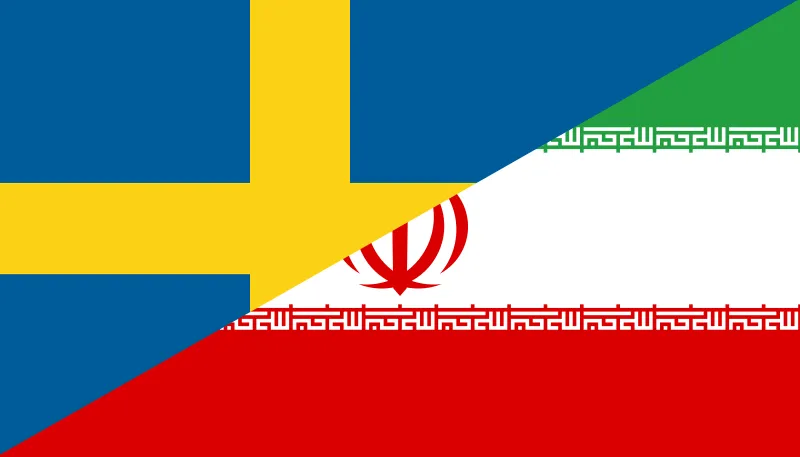
When talking about the differences between Sweden and Iran, the point isn’t that one is completely better than the other. Iran, especially Tehran, has extensive resources: medical centers, universities, city services, stores, restaurants, cultural facilities, and skilled professionals.
But in certain areas, especially governmental structures, public infrastructure, enforcement of laws, long term planning, and social culture, there are differences that make everyday life in Sweden a different experience. These differences fall into two groups: cultural, and structural/infrastructural.
1. Cultural Differences
Respect for traffic rules
In Sweden, following traffic laws is less about fear of fines and more a part of general culture. Coming to a full stop for pedestrians, respecting right of way, keeping a safe distance, and stopping at red lights even on empty streets are just normal behavior. The law exists, but what matters more is its social acceptance.
Social trust
Sweden runs on a high level of trust between people and institutions. The tax system, government services, employment contracts, and social services are all designed around this trust, which means less need for heavy controls and faster processes overall.
This isn’t just a cultural attitude, it’s backed by structure. Systems are built so that no individual, official, or institution can easily exploit them for personal gain: financial transactions are traceable, public spending is auditable, conflicts of interest must be disclosed, and independent bodies (courts, ombudsmen, auditors) can check those in power. Sweden also has a constitutional principle of public access to official records (offentlighetsprincipen): most government documents, emails, and decisions are public by default, and any citizen or journalist can request to see them, no special standing required.
Freedom of speech and a free press reinforce this: journalists and citizens can criticize the government, expose corruption, and question officials without fear of retaliation. Trust here isn’t naive, it’s earned through accountability, knowing that wrongdoing will surface and be dealt with.
In societies with strong censorship or limited media freedom, different groups end up with completely different versions of events, which makes them less likely to trust each other. When governments restrict open discussion online, people move to private forums or encrypted groups instead, where misinformation and extreme ideas can spread unchallenged. In short, freedom of speech acts like a safety valve: it lets disagreements surface early, where they can be debated and managed. Without it, disagreements don’t disappear, they turn into hidden tensions that grow into deeper divisions.
Education and raising kids
In Iran, schooling leans heavily on memorization, written exams, and intense competition, culminating in the konkur. Schools are gender-segregated, and religious and ideological instruction takes up a significant part of the curriculum.
In Sweden, teaching from primary school onward centers on group work, critical thinking, creativity, and project-based learning, with no stressful grading until much later ages. Kids are treated as rights-holders in their own right: Sweden was the first country in the world to legally ban corporal punishment of children, even by parents, back in 1979. Children’s rights are taken seriously and overseen by dedicated bodies like the Barnombudsmannen (Children’s Ombudsman).
Public space, civic responsibility
Keeping quiet in shared buildings, waiting in line, keeping public spaces clean, respecting privacy, and looking out for the elderly and disabled are just normal social behavior. Similarly, sorting waste, paying taxes, and following city regulations are treated as a citizen’s part of the system, not just rules imposed on them.
Ta’arof and its institutional cost
Ta’arof is the Iranian custom of ritual politeness, deference, and indirectness, insisting someone go first, downplaying your own needs, avoiding a direct “no”. As etiquette between friends it’s harmless, even charming. The problem is what happens when it leaks into institutions that are supposed to run on rules instead of relationships.
A concrete example: a student who believes a grade was marked unfairly has, on paper, the right to request a re-review by a different teacher. In practice, in Iran this rarely happens through that formal channel. Students, parents, and even teachers avoid directly confronting a colleague’s authority out of ta’arof, so disputes get handled quietly, informally, or not at all, and the actual rule is never invoked. The same pattern shows up in workplaces, an employee won’t formally escalate a manager’s bad decision, preferring to absorb it or route around it rather than put the disagreement on record.
At the political level the effect is more serious. A city council member or a minister’s own advisors may privately know a policy is failing, budget numbers don’t add up, a project is behind, public anger is building, but ta’arof toward superiors, and the risk of appearing disloyal, means that information gets softened or withheld on the way up. Officials rarely contradict a superior publicly, criticism gets wrapped in so much indirection in official meetings that it loses its force, and by the time a problem surfaces openly it’s often already a crisis. Decision-makers end up acting on filtered, overly polite information instead of the actual state of things, which is part of why policy course-corrections tend to come late and after public blowups rather than early and quietly. The result across all these settings is that written rules and reporting lines exist, but the social cost of directly invoking them against someone with more status is often too high to pay, so people work around problems instead of fixing them, or surface them only once they’ve become too big to hide.
Sweden runs on the opposite instinct: directness is the norm, not rudeness. Disagreeing with a teacher, manager, or official through the proper channel is unremarkable, expected, even. If a grade seems wrong, a student requests a review, in writing, and the process runs on its own regardless of who is on the other side. This is only possible because it’s paired with the structural pieces described earlier, independent oversight, traceable decisions, freedom to criticize without retaliation. Directness without those backing structures would just be conflict; structure without directness, as often happens in Iran, leaves the rules unused.
2. Structural and Infrastructural Differences
Job security and labor laws
Employment contracts have a defined framework, dismissal must follow legal procedure, annual leave is a legal right, overtime is regulated, labor unions actively defend workers, and unemployment support exists. The goal is balance between employer needs and employee security.
Work culture and work-life balance
Swedish workplaces run on fika: regular coffee breaks with coworkers built into the workday to maintain closeness and mental health, not an occasional perk. Hierarchy is flat, the gap between manager and employee is small, everyone is expected to speak up, and decisions tend to be made by consensus rather than handed down from the top.
Overtime isn’t encouraged, offices are largely empty by 5pm, and personal and family time takes clear priority. In Iran, the line between work and personal life is often blurred, partly due to economic pressure and partly due to workplace social obligations (ta’arof, more on which below).
Parental leave
Parents get significant time to care for children, both mothers and fathers are encouraged to take leave, and part of it is reserved specifically for each parent, so a child doesn’t push one parent (usually the mother) out of the workforce.
Public transportation and cycling
Buses, trains, and the metro run on predictable schedules, with real-time tracking in apps and planned connections between lines, so a car isn’t always necessary. Cycling is treated as core transportation infrastructure, not a hobby, with separate lanes, dedicated signals, and city design built around cyclists.
Accessibility and digital services
Accessibility (ramps, elevators, wheelchair-friendly buses, routes for the visually impaired) is designed in from the start of most urban projects. Most administrative work, taxes, address changes, healthcare, prescriptions, digital signatures, is done online. Iran has made e-government progress too, but the difference is in how integrated these systems are and how routinely people use them.
Fiber internet is widely available with no broad access restrictions, and enough services depend on it that it’s treated as essential infrastructure, like electricity or water.
Almost all of this digital access runs through one piece of infrastructure: BankID, a national electronic identification system issued through banks. With it, a person can log into government services, sign contracts, file taxes, get a prescription, or authorize a bank transfer, all with the same digital ID, verified on their phone. It’s used by virtually the entire adult population and by banks, healthcare, insurers, and public agencies alike, which is exactly why the system can afford to put so many services online: identity verification is solved once, centrally, and trusted everywhere else.
Free education, no national entrance exam
Public schools are free, higher education is free for most people, and university admission runs mostly on academic records rather than a single high-stakes exam like Iran’s konkur. On top of that, CSN (Centrala Studiestödsnämnden) gives students loans at very low, near-zero interest to cover living costs, with repayment starting only after graduation and far more flexible terms than a bank loan.
Defense readiness
Sweden invests heavily in defense, especially air power, fielding domestically built Gripen fighters. But the bigger difference is the mindset: Total Defence treats preparedness as a shared job across the military, government, municipalities, companies, and citizens, not just the army’s task.
The government plans ahead for war, cyberattacks, long power outages, communication disruptions, natural disasters, and resource shortages. One concrete result is Om krisen eller kriget kommer (“If Crisis or War Comes”), a household booklet covering water/food storage, emergency radios, power banks, first aid, and how to tell official news from rumors, meant to prepare people, not scare them.
Sweden also runs the VMA public siren system, tested periodically so people recognize it and know how to react, plus SE-Alert, a mobile alert sent directly to phones in affected areas. And there’s a network of about 64,000 civil defense shelters in residential, office, and industrial buildings; people aren’t assigned a specific one; in an emergency you go to the nearest. The MSB agency publishes an online shelter map so anyone can find the closest shelter to home, work, or school. (msb.se, mcf.se)
Summary
The main difference between Sweden and Iran isn’t just more resources, it’s how systems are designed and how far ahead they plan: managing crises before they happen, educating people before incidents occur, building infrastructure before it’s needed.
Iran has its own strengths too: strong social relationships, adaptability, quick problem-solving, and extensive urban amenities in major cities. The core difference is that Sweden operates on foresight, rule of law, and long-term systemic planning, while Iran more often focuses on solving problems after they arise.